
Picture this: It’s 10 PM on a Tuesday night. You’re driving home on I-10 outside Houston after a long day. Suddenly, your car sputters, slows down, and stops dead on the shoulder. Your phone battery is at 8%. You have no idea who to call.
Sound familiar? For thousands of Texas drivers every single week, this isn’t just a “what if” it’s a real, terrifying situation.
That’s exactly why roadside assistance exists. But here’s the thing: most people don’t truly understand what it covers until they desperately need it. And by then? It’s too late to prepare.
This guide breaks down everything you need to know about roadside assistance coverage, how it works in Texas, and what to do when you need help right now especially if you’re in the greater Houston or Sugar Land area.
Table of Contents
ToggleWhat Does Roadside Assistance Cover? (The Short Answer)
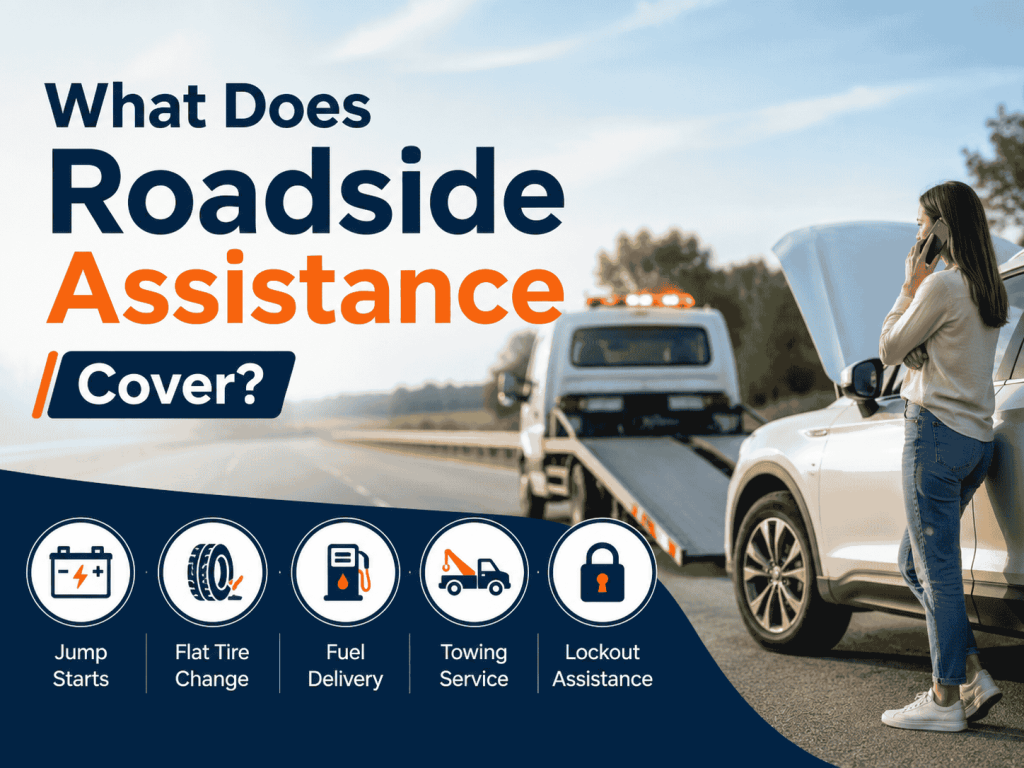
Roadside assistance is an emergency service that helps you when your vehicle breaks down or becomes disabled. In most cases, a standard roadside assistance plan covers the following services:
- Towing — Getting your vehicle safely transported to a repair shop
- Battery jump-start — Restarting a dead or drained battery
- Flat tire change — Swapping out a flat with your spare
- Fuel delivery — Bringing gas to you when you run out
- Lockout service — Unlocking your car if you’re locked out
- Winching/extraction — Pulling your vehicle out of mud, ditches, or snow
But here’s the critical detail most drivers miss: not all plans cover everything equally. Some plans have mileage limits on tows. Others charge extra for after-hours service. And some simply don’t cover commercial vehicles or trailers.
Keep reading: we’ll walk through each service in detail so you know exactly what to expect.
How Does Roadside Assistance Work?
Understanding how roadside assistance works can save you a lot of stress in the moment.
Here’s the basic process:
Step 1: You call or request help. Most providers offer a 24/7 hotline or mobile app. You give your location, describe the problem, and they dispatch a service vehicle.
Step 2: A technician or tow truck arrives. Depending on your location and the provider, wait times vary from 30 minutes to over an hour. In rural parts of Texas think West Texas or the Panhandle; wait times can stretch even longer.
Step 3: The problem is assessed. If it’s a quick fix (dead battery, flat tire, lockout), the technician handles it on-site. If your car needs more work, it gets towed to the nearest repair facility or one of your choosing, depending on the plan.
Step 4: You’re back on the road (or safely off it). Depending on the situation, you may be able to drive home, or you may need to arrange alternative transportation while your car is being repaired.
The whole process sounds simple. But when you’re stranded on the Gulf Freeway in Houston at midnight, “simple” can feel very far away. That’s why having a reliable provider you trust one that actually shows up matters more than anything else.
A Closer Look at What Roadside Assistance Services Texas Drivers Actually Use
1. Towing Service
Towing is the most commonly used and arguably most important roadside assistance service. When your car can’t be fixed on-site, it needs to be towed to safety.
Most plans offer towing up to a certain number of miles typically 5 to 100 miles depending on your tier. If the repair shop is farther than your plan covers, you pay out of pocket for the extra distance.
For Texas drivers, this matters a lot. Texas is massive. If you break down between San Antonio and El Paso, for example, a 10-mile tow limit is practically useless. Always check the towing mileage limit before choosing a plan.
If you’re in Sugar Land, Houston, Katy, Pearland, or anywhere in the Greater Houston area, Texans Crown Towing is the trusted local choice, fast, affordable, and available 24/7.
📞 Call Texans Crown Towing: +1 (713) 929-6299
2. Battery Jump-Start
A dead battery is one of the most common reasons drivers call for roadside help, especially in the Texas heat, which is notoriously hard on car batteries.
A jump-start service connects jumper cables from a power source to your battery to get your engine running again. It’s quick, usually done in under 15 minutes. However, if your battery is truly dead (not just discharged), a jump-start is only a temporary fix. You’ll still need a replacement battery soon.
3. Flat Tire Change
Got a spare in the trunk? Good. Roadside assistance can put it on for you. Technicians arrive with the tools to safely jack up your vehicle and swap out the flat.
What if you don’t have a spare? This is where many drivers get caught off guard. If you have run-flat tires, a tire inflation kit only, or no spare at all your technician may not be able to fix the flat on-site. In that case, your car will need to be towed. Make sure your plan covers this scenario.
4. Fuel Delivery
Running out of gas happens to the best of us especially on long stretches of Texas highways where gas stations can be 30+ miles apart.
Most roadside assistance plans will deliver enough fuel to get you to the nearest gas station. Keep in mind: you typically pay for the cost of the fuel itself; the delivery service is what’s covered.
5. Lockout Service
Locked your keys inside your car? It happens constantly, and it’s incredibly frustrating. Roadside assistance dispatches a locksmith or technician who can safely open your vehicle without damaging it.
Important note: Modern keyless and smart key vehicles can be trickier to unlock. Always confirm that your provider has experience with your vehicle type, especially if you drive a newer model.
6. Winching and Vehicle Extraction
Drove a little too close to a ditch? Slid off the road in a rainstorm? Got stuck in the mud on a dirt road near Waller or Conroe?
Winching service uses a cable or chain to pull your vehicle back onto solid ground. Not all basic plans include this, so check your policy carefully especially if you do a lot of off-road or rural driving in Texas.
What Roadside Assistance Does NOT Cover
Here’s something the fine print won’t always make obvious. Most roadside assistance plans do not cover:
- Mechanical repairs — They get you to a shop; they don’t fix the car
- Accident recovery — If you were in a collision, your auto insurance handles the tow
- Cost of parts or labor at the repair facility
- Second tows for the same incident
- Pre-existing damage or vehicles already at a repair shop
- Commercial trucks or trailers (unless you have a commercial plan)
Always read your coverage summary before you need it, not during a stressful breakdown on the side of Loop 610.
Top 10 Roadside Assistance Companies in Texas: What to Know
If you’re shopping around or comparing options, here’s a quick overview of the most well-known providers used by Texas drivers:
- Texans Crown Towing: One of the most recognized names; multiple membership tiers; strong network across Texas
- GEICO Emergency Road Service: Bundled with auto insurance; competitive pricing
- State Farm Roadside Assistance: Add-on through your auto policy
- Allstate Motor Club: Flexible plans; app-based dispatch
- Progressive Roadside Assistance: Can be added to your insurance policy affordably
- Agero: Powers many insurance-branded roadside programs
- Better World Club: Eco-friendly alternative; decent Texas coverage
- Urgently: App-based, on-demand service; solid in urban Texas markets
- USAA Roadside Assistance: Excellent for military families; very reliable
- Local Independent Towing Companies: Often the fastest, most personal service in your area
That last one deserves special attention. When you’re stranded in Sugar Land or stuck in Houston traffic with a dead car, a local towing company can often reach you faster than a national dispatch center coordinating from a call center in another state.
Texans Crown Towing has built a reputation as one of the most responsive and trustworthy local providers in the greater Houston area. When minutes matter, local knowledge wins.
📞 +1 (713) 929-6299 — Available 24 hours, 7 days a week
Roadside Assistance in Houston: What Makes It Different
Houston is one of the largest cities in the United States and one of the most car-dependent. With more than 2.3 million registered vehicles in Harris County alone, the roads here are busy, complex, and sometimes downright dangerous when something goes wrong.
Here’s what makes roadside assistance in Houston a little different from other cities:
- Traffic congestion can slow down response times significantly, especially during rush hour on the 610 Loop, I-45, or US-59
- Flooding: Houston is prone to flash floods, and a flooded vehicle situation requires a specialized tow, not just a standard pickup
- Extreme heat: Texas summers push car batteries and tires to their limits; breakdowns spike in summer months
- Sprawl: From The Woodlands to Pearland, from Katy to Baytown, the metro area is enormous; choose a provider with real local coverage
Whether you’re commuting from Sugar Land on Highway 90 or driving into downtown Houston for work, having a reliable roadside service on speed dial is not optional, it’s essential.
When Should You Call a Towing Service Directly?
Sometimes, calling a towing service directly is smarter than waiting for a roadside assistance plan to dispatch someone.
Consider calling a tow company directly when:
- Your roadside assistance plan has a long wait time (over 60 minutes)
- Your vehicle was in an accident and needs specialized recovery
- You’re in an unsafe location (highway shoulder, flooded area, dark road) and need help fast
- Your plan’s tow mileage limit won’t get you where you need to go
- You simply want a local company you can trust and speak to directly
In these situations, the few minutes it takes to call a local towing service directly can make a meaningful difference in your safety and peace of mind.
Is Roadside Assistance Worth It in Texas?
For most Texas drivers, the answer is yes especially if you drive frequently, commute long distances, own an older vehicle, or travel through rural parts of the state.
The average cost of a single tow in Texas ranges from $75 to $200+ depending on distance. A roadside assistance plan, by contrast, can cost as little as $5 to $15 per month.
Do the math. One tow a year more than pays for the plan. And the peace of mind alone has real value when you’re driving at night on an empty stretch of Highway 290.
That said, having a plan doesn’t mean you’re fully covered in every scenario. Always keep the number of a trusted local towing company saved in your phone as a backup.
🚨 Stranded Right Now? Call Texans Crown Towing
If you’re in the Houston, Sugar Land, or surrounding Texas area and need help immediately, don’t wait.
Texans Crown Towing provides:
- Fast 24/7 emergency towing
- Local service across Greater Houston and Sugar Land
- Experienced, professional drivers
- Fair, transparent pricing
- Flood-recovery and specialty towing services
📞 Call Now: +1 (713) 929-6299
We’ll come to you, day or night.
Frequently Asked Questions (FAQ)
What does roadside assistance typically cover?
Roadside assistance typically covers towing, battery jump-starts, flat tire changes, fuel delivery, lockout service, and vehicle extraction or winching. Coverage details and mileage limits vary by provider and plan tier.
Does roadside assistance cover towing to any repair shop?
It depends on your plan. Some plans allow you to choose the repair shop; others tow you to the nearest qualified facility. Many plans also have a mileage cap on towing typically between 5 and 100 miles.
How does roadside assistance work with my car insurance?
Some auto insurance policies include roadside assistance as an add-on. Others are completely separate memberships. When your car is towed due to an accident, that typically falls under your auto insurance not your roadside plan.
How long does it take for roadside assistance to arrive in Texas?
Wait times vary widely. In urban areas like Houston or San Antonio, response times are often 30 to 60 minutes. In rural or remote parts of Texas, it can take 1 to 2 hours or longer. Local towing companies often respond faster in their service area.
Is roadside assistance free with my car?
Some new vehicles come with complimentary roadside assistance for a limited period (usually 1 to 3 years). After that period ends, you’ll need to purchase a separate plan or add it to your insurance policy.
What should I do if I’m stranded in Houston and don’t have roadside assistance?
Call a local towing company directly. Texans Crown Towing in Houston is available 24/7 and can dispatch quickly. Reach them at +1 (713) 929-6299. Also, make sure you’re safely off the road, turn on your hazard lights, and stay in your vehicle if you’re on a busy highway.
Does roadside assistance cover flat tires if I don’t have a spare?
If you don’t have a usable spare tire, most roadside assistance providers will tow your vehicle instead of fixing the flat on-site. This counts toward your towing coverage, so check your plan’s towing limits.
Can I use roadside assistance more than once?
Most plans allow multiple uses per year, but there are usually limits commonly 3 to 5 service calls per membership year. After that, you may pay out-of-pocket or be charged a fee.
Final Thoughts
Roadside emergencies don’t announce themselves. They hit when you’re exhausted, running late, or driving through parts of Texas where help feels very far away.
Understanding what roadside assistance covers and what it doesn’t means you’re never caught off guard. Whether you’re rolling through downtown Houston, commuting from Sugar Land, or crossing the state on I-10, make sure you have a plan in place before you need it.
And if that moment comes sooner than expected?
📞 Texans Crown Towing is one call away: +1 (713) 929-6299
Fast. Local. Reliable. We’ve got you covered all across the greater Houston area and beyond.
Texans Crown Towing proudly serves Sugar Land, Houston, Katy, Pearland, Missouri City, Stafford, Richmond, Rosenberg, The Woodlands, Pasadena, and surrounding communities throughout Texas.