

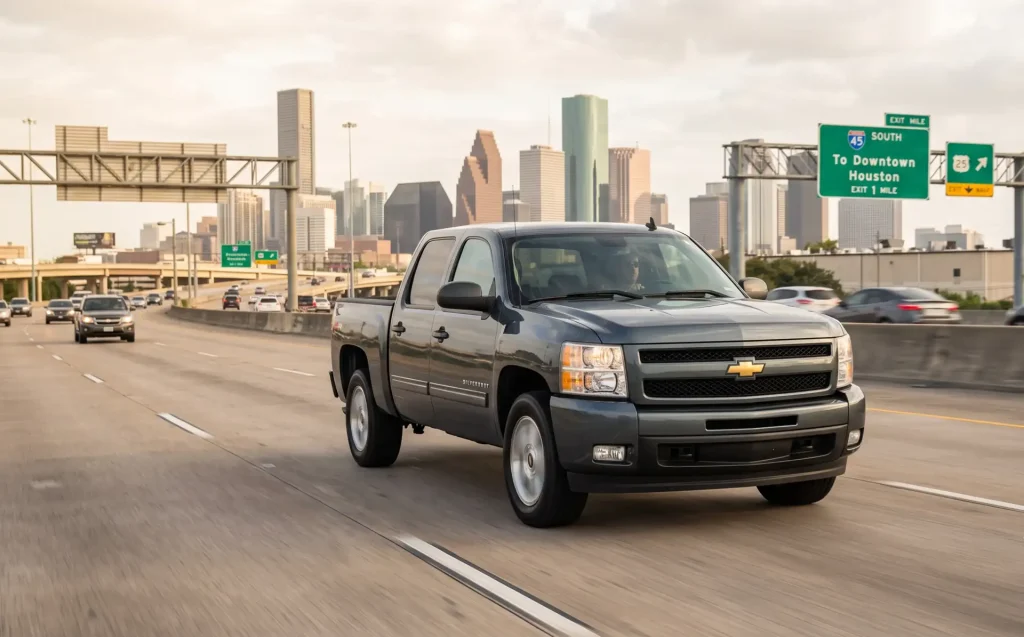
Finding the perfect truck engine from a split model year requires careful research. If you are navigating the used truck market or maintaining your current vehicle in Houston, TX, you already know that 2007 was a unique year for Chevrolet. General Motors sold two completely different versions of the truck side by side: the older GMT800 “Classic” body style and the redesigned GMT900 “New Generation” pickup.
Whether you are hauling building materials across the Sam Houston Tollway or commuting from Katy into the city center, knowing what is happening under your hood is critical. Choosing the wrong setup can result in high fuel bills or unexpected mechanical trouble.
This comprehensive guide breaks down every 2007 Silverado engine package, analyzes its performance metrics, and highlights the specific maintenance warning signs you must watch for on Texas highways.
Table of Contents
ToggleThe Quick Answer: 2007 Silverado Engine Lineup At a Glance
The powertrain choices for this model year vary depending on whether you drive a Classic model or the New Generation redesign. Across the half-ton platform, buyers could choose between a fuel-conscious V6 and several different small-block V8 options.
Here is a quick look at the main options available for the 2007 Chevrolet Silverado 1500 engine configurations:
- 4.3L Vortec V6 (LU3): 195 hp / 260 lb-ft of torque
- 4.8L Vortec V8 (LY2): 295 hp / 305 lb-ft of torque
- 5.3L Vortec V8 (LY5 / LMG): 315 hp / 338 lb-ft of torque
- 6.0L Vortec V8 (L76): 367 hp / 375 lb-ft of torque
If you need more commercial-grade muscle, you should compare these lighter setups against the heavy-duty 2006 Chevrolet Silverado 2500HD specs to see if a three-quarter-ton frame fits your workload better.
Breaking Down Every 07 Chevy Silverado Engine Choice
Understanding the specific features of each motor variant helps you pick the right vehicle or properly maintain your current ride.
4.3L Vortec V6
This base engine was built for affordable utility. It provides decent fuel economy for light urban deliveries, but it can feel underpowered when pulling heavy trailers up freeway ramps.
4.8L Vortec V8
The smallest V8 option gives you traditional internal construction without cylinder deactivation tech. It is a highly reliable workhorse that revs smoothly and lasts for hundreds of thousands of miles with simple upkeep.
5.3L Vortec V8
The most common 07 Chevy Silverado engine found on the road today. It balances daily driving performance with impressive torque, though certain versions introduced new fuel-saving technologies that require strict maintenance habits.
6.0L VortecMax V8
If you want maximum towing capabilities without stepping up to a heavy-duty chassis, this high-output choice delivers exceptional throttle response and heavy-duty towing capacity.
2007 Chevrolet Silverado 1500 Engine Specifications
To help you choose between the different Silverado 1500 engine options from this model year, we have outlined the factory performance specifications below.
| Engine Size & Type | Horsepower | Torque (lb-ft) | Fuel Type | Primary Purpose |
| 4.3L Vortec V6 | 195 hp | 260 lb-ft | Regular Gas | Light city utility and basic commuting |
| 4.8L Vortec V8 | 295 hp | 305 lb-ft | Regular Gas | Daily driving and light fleet work |
| 5.3L Vortec V8 | 315 hp | 338 lb-ft | Gas / Flex-Fuel | All-around towing and daily family use |
| 6.0L Vortec V8 | 367 hp | 375 lb-ft | Premium Gas Rec. | Heavy trailer towing and max payload |
Step-by-Step Diagnostic Guide for Common Engine Issues
When an older V8 truck begins running roughly or throwing dashboard warning lights, follow this structured diagnostic path to identify the problem before calling a shop.
Step 1: Scan for OBD-II Diagnostic Trouble Codes
Plug a digital scan tool into the port located under the driver-side dashboard console. Read the active and pending fault codes to isolate which specific cylinders or engine sensors are experiencing faults.
Step 2: Inspect Engine Oil Levels and Cleanliness
Pull the dipstick to check both fluid level and oil color. If the oil level is significantly low but you see no puddles under the truck, your engine might be consuming oil internally through the positive crankcase ventilation system.
Step 3: Check Spark Plugs and Ignition Wires
Remove the ignition wires and pull the spark plugs from the affected cylinders. Look for black carbon deposits or oil fouling on the tip, which indicate incomplete combustion or internal mechanical oil intrusion.
Step 4: Test Fuel Injector Resistance
If you encounter an engine misfire accompanied by a specific fuel delivery fault code, use a digital multimeter to measure internal resistance across each injector terminal. A faulty electrical coil inside the injector will cause a persistent dead misfire.
Engine Symptom, Cause, and Outcome Matrix
This reference table helps connect common driving issues with their mechanical root causes and long-term results.
| Symptoms Observed | Common Internal Cause | Immediate Outcome |
| Ticking noise from the top of the engine | Collapsed lifter mechanism | Engine misfire and loss of power |
| Rapid oil loss without visible leaks | Faulty driver-side valve cover design | Clogged catalytic converters and engine damage |
| Check engine light with zero driving issues | Corroded or wet knock sensor harness | Decreased timing advance and low fuel economy |
| Rough idle with low fuel pressure | Failing fuel pump assembly | The truck stalls or refuses to start entirely |
Common Pitfalls to Avoid with a 2007 Silverado
Truck buyers and owners often make critical mistakes when dealing with this specific transition year model.
- Ignoring High Oil Consumption: Many owners assume an engine is fine because it does not drip oil onto their driveway. The 2007 5.3L engine can burn oil silently, leading to low oil levels that damage internal engine bearings.
- Using Incorrect Replacement Valve Covers: When trying to fix oil consumption issues, installing a standard factory-style replacement cover will not work. You must use the updated, redesigned GM valve cover featuring the relocated PCV baffle system.
- Mixing Up Classic and New Generation Components: Because parts vary between the GMT800 and GMT900 platforms, ordering replacement parts using only the model year can result in components that do not fit your truck.
Safety and Mechanical Urgency Guide
Some dashboard warning signs require immediate attention to prevent total vehicle failure or dangerous road situations.
| Warning Indicator | Safety Severity | Necessary Driver Action |
| Solid Check Engine Light | Low to Medium | Schedule a diagnostic scan within the upcoming week |
| Flashing Check Engine Light | Critical Emergency | Pull off the road safely, shut down the vehicle, and tow it |
| Low Oil Pressure Warning | Critical Emergency | Turn off the engine immediately to stop severe internal damage |
| High Engine Temperature Gauge | High Urgency | Turn off the A/C, turn on the heater, and pull over safely |
Estimated Repair and Service Costs in Houston
Operating an older truck means budgeting for common mechanical issues that arise over time.
- Valve Cover Replacement (Updated Design): $250 to $400 (Includes 1.5 hours of professional labor and gasket sets)
- Fuel Pump Assembly Replacement: $650 to $950 (Requires dropping the fuel tank or lifting the truck bed)
- Knock Sensor Replacement: $350 to $550 (Includes parts and labor, depending on sub-model location)
- Complete Lifter and AFM Replacement: $2,200 to $3,500 (Requires removing the cylinder heads and intake assembly)
Local Environmental Challenges for Houston Truck Owners
Operating a full-size truck in Southeast Texas presents distinct mechanical demands. The high heat and humidity during summer months mean your cooling system must work overtime to protect your engine.
High ambient temperatures break down motor oil faster, accelerating wear if you neglect your fluid service intervals. Additionally, stop-and-go commutes on highway routes like I-45 or US-59 speed up wear on components like fuel pumps and electrical systems.
When preparing for your annual Texas vehicle safety inspection, ensure your vehicle is free of exhaust leaks and that your check engine light is turned off to ensure a quick pass.
Pro Tip #1: Check Your Fluids Closely
If you drive frequently in high-temperature conditions or tow heavy trailers, check your engine oil levels every two weeks. Catching low oil levels early protects vulnerable valve train components from premature wear.
Pro Tip #2: Clean the Cooling System regularly
Road debris, insects, and dirt can collect in your radiator fins over time, reducing airflow. Take a garden hose and gently flush your radiator from the engine side to maintain optimal cooling performance during hot summer days.
Frequently Asked Questions
What is the most reliable 2007 Silverado engine?
The 4.8L V8 is widely considered highly reliable because it features a simple design without complex cylinder deactivation systems. With regular maintenance, it easily clears high-mileage targets.
Why is my 2007 Silverado 5.3L burning so much oil?
This issue is typically caused by a faulty PCV baffle configuration inside the factory driver-side valve cover, which draws oil vapor into the intake manifold. A secondary cause can be sticky oil rings related to the Active Fuel Management mechanical system.
How can I tell if my truck is a Classic or New Generation model?
Look closely at the front of your vehicle. Classic models feature a distinctive stepped front hood line and a chrome bar cutting horizontally across the grille. New Generation models have a taller, squared front fascia with larger, stacked headlight assemblies.
Can I disable the cylinder deactivation feature?
Yes. You can disable the system using an electronic plug-in module that connects directly to your OBD-II port, or by having a specialized shop perform a custom computer tune to keep the motor running in V8 mode continuously.
What type of engine oil should I use?
The factory recommendation for these engines is high-quality 5W-30 motor oil. If your truck has high mileage, switching to a high-mileage oil formula helps condition aging rubber seals and lowers the risk of internal oil leaks.
Keep Your Truck Performing Safely on Texas Roads
Taking care of your truck’s powertrain ensures it remains a dependable asset for your business or family transit needs. Staying aware of common mechanical symptoms and handling minor issues early saves you money and keeps your vehicle out of the shop.
If unexpected mechanical trouble or a sudden breakdown leaves you stranded on a local roadway, you do not have to manage the situation alone. For fast, cautious, and professional assistance, reach out to Texans Crown Towing for reliable local vehicle recovery and towing services across the greater Houston area.