

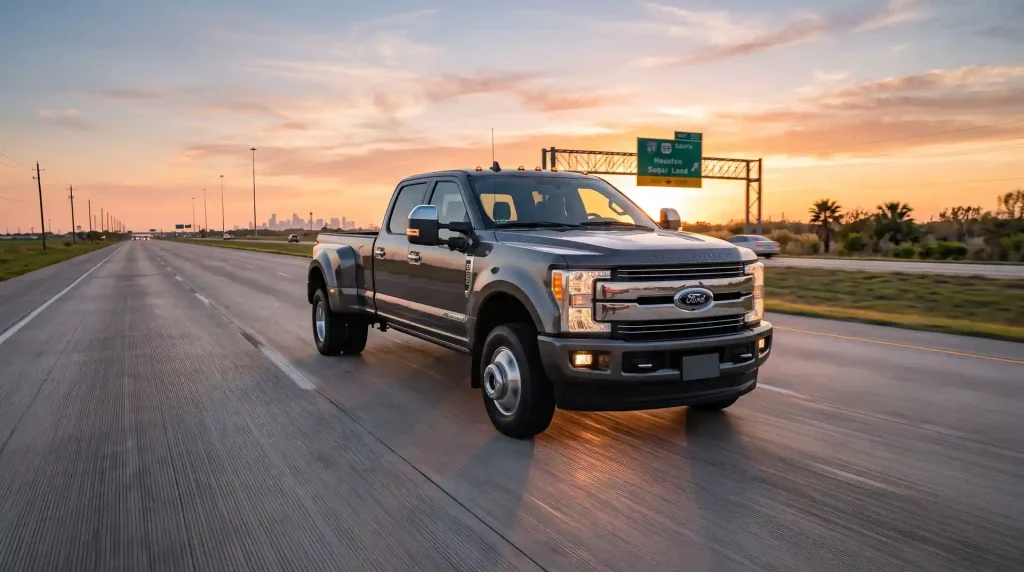
Driving down I-10 or navigating tight construction lanes around Houston requires extra focus when you are behind the wheel of a heavy-duty pickup. If you are planning to purchase a dual rear wheel (DRW) pickup or rent one for a big job, knowing its exact dimensions is essential.
Here at Texans Crown Towing, we assist heavy-duty truck drivers every single day across Fort Bend and Harris County. A standard modern dually truck measures between 95 inches and 96 inches wide at the rear fenders, which equals roughly 8 feet. Because standard vehicle lanes in Texas span 12 feet wide, a dually leaves you with only about 2 feet of clearance on either side.
In this guide, we will break down exact brand measurements, lane clearance rules, and practical driving tips so you can handle a dually with complete confidence.
Table of Contents
ToggleQuick Comparison: Dually Truck Widths by Brand
Most major truck manufacturers design their dual rear wheel trucks to stay just under the federal legal width limit without requiring special highway permits. As a result, width variations across brands usually come down to fender flares and mirror styles.
For a clearer picture, check out how the primary heavy-duty models compare:
| Truck Model & Trim | Overall Width (Fenders) | Width (Mirrors Retracted) | Width (Mirrors Extended) |
| Ford F-350 / F-450 Super Duty | 96.0 inches (8.0 ft) | 105.9 inches | 110.0 inches |
| Chevy Silverado 3500HD | 96.0 inches (8.0 ft) | 105.0 inches | 110.1 inches |
| GMC Sierra 3500HD | 96.0 inches (8.0 ft) | 105.0 inches | 110.1 inches |
| RAM 3500 Heavy Duty | 96.0 inches (8.0 ft) | 105.4 inches | 111.0 inches |
Note: While rear fender width remains steady at 96 inches, extendable tow mirrors add significant width when unfolded.
Single Rear Wheel vs. Dually Width: Understanding the Difference
Many drivers wonder why dual rear wheel trucks feel so much larger than standard single rear wheel (SRW) pickups on the road. The front cab of a dually is identical to a standard 3/4-ton or 1-ton truck. However, the rear axle is wide enough to house four tires, and wide fiberglass flares cover those extra wheels.
To understand how the extra wheels affect overall size, consider these key structural differences:
- Fender Extension: Standard SRW pickups measure around 80 to 81 inches wide. Adding a dual rear axle increases fender width by 15 to 16 inches.
- Track Width: The rear wheels sit wider apart to give the truck a stable base. This extra width prevents body roll when pulling heavy fifth-wheel trailers down fast highways.
- Mirror Clearance: Dually trucks come equipped with wide tow mirrors to help drivers see past the rear hips. As a result, your mirrors extend nearly 9.2 feet from tip to tip.
Because dually trucks carry significant weight and wide footprints, standard roadside equipment cannot always haul them. If you ever encounter mechanical trouble on the road, our specialized heavy duty towing equipment is specifically built to handle wide-track trucks safely.
Crucial Space Considerations for Dually Owners
Before bringing home a dually, you must ensure it fits into your daily routine and storage spaces.
Standard Parking Spaces
Standard parking spots in commercial lots usually measure 8.5 to 9 feet wide. Because a dually spans 8 feet at the rear tires, you will have less than 6 inches of space on either side. Therefore, parking near the back of commercial lots is usually the safest option to avoid door dings.
Residential Garages
Standard single-car garage doors measure 8 feet (96 inches) wide, while double garage doors span 16 feet wide. A dually truck will not fit through an 8-foot garage door without striking the rear fenders or tow mirrors. To park inside comfortably, you need a custom garage door that measures at least 10 feet wide.
Automatic Car Washes
Most automatic tunnel car washes limit vehicle width to 85 or 90 inches. Driving a 96-inch dually into a standard automated car wash will damage the machine brushes or crack your fiberglass rear fenders. Consequently, hand washing or using touchless bays with wide drive-through lanes is necessary.
Step-by-Step Guide: How to Measure Your Dually Truck
If you are planning to haul your truck on a trailer or store it in a tight space, measure your vehicle manually using these steps:
- Park on Level Ground: Park your truck on a flat concrete surface and straighten the steering wheel completely.
- Measure Rear Fender Width: Drop a plumb bob or heavy string from the outermost edge of the left rear fender flare to the ground, and mark the spot. Repeat on the right fender flare, then measure the distance between both marks.
- Measure Mirror Width: Roll down both front windows. Run a measuring tape straight through the cabin from the outer tip of the left mirror to the outer tip of the right mirror.
- Check Front Track Width: Measure from the outer sidewall of the front driver-side tire to the outer sidewall of the front passenger-side tire to confirm ramp fitment.
If you ever experience a flat tire or wheel failure while hauling, review our tips on managing a car sputtering check engine light or handling roadside emergencies to stay safe.
> Pro Tip #1: Watch the Toll Booth Lanes
Standard highway lanes are 12 feet wide, but older toll plazas and construction zones often narrow down to 9 feet (108 inches). When driving through narrow lanes, fold your tow mirrors in or choose the widest dedicated truck lane to prevent mirror strikes.
Driving a Wide Truck on Houston Roads
Operating a 96-inch-wide vehicle in Southeast Texas requires specific driving habits. High humidity and sudden rainstorms along I-45 or the 610 Loop can make lane lines difficult to see. Because a dually occupies almost the full width of a lane, keeping your vehicle centered requires constant mirror checks.
In addition, Texas summer heat expands asphalt surfaces, which can lead to rutted lanes in heavy traffic corridors. Because the dual rear tires track slightly wider than the front steering tires, you might feel the rear end pull slightly when driving in deep road ruts.
Furthermore, if you experience engine strain or transmission issues while hauling heavy loads in extreme heat, you can consult our detailed guide on silverado 1500 engine options to compare powertrain limits and towing performance.
Common Pitfalls to Avoid with Dually Trucks
New dually owners often run into preventable issues during their first few months of driving.
- Forgetting the Rear Hips in Turnarounds: The front wheels may clear a gas station pump or curb, but the wide rear fenders swing out wider. Always make wider turns to protect your rear fenders from striking posts or curbs.
- Assuming All Drive-Thrus Are Compatible: Fast-food and bank drive-thru lanes often feature narrow concrete curbs and tight turns. As a result, dually trucks frequently scratch their rear wheels on low curbs.
- Ignoring Local Speed Limits in Narrow Lanes: Because dually trucks occupy more lane space, driving at high speeds next to concrete highway barriers leaves zero margin for error. According to the Federal Highway Administration, maintaining proper lane centeredness requires extra tracking distance in heavy commercial traffic.
> Pro Tip #2: Use Your Lower Spotter Mirrors
Adjust your lower convex spotter mirrors downward so you can see the rear fender flares and back tires clearly. This simple adjustment helps you center the truck perfectly between parking lines and clear low curbs during tight turns.
Frequently Asked Questions
What is the widest legal limit for a truck without a permit?
Under federal regulations, the maximum vehicle width allowed on national highways without an oversized load permit is 102 inches (8.5 feet). Because dually trucks measure 96 inches across the rear fenders, they remain completely legal without special permits.
Can a dually truck fit through a standard drive-thru lane?
While some modern drive-thru lanes can accommodate wide vehicles, many feature tight turn radii surrounded by high concrete curbs. Consequently, parking and walking inside is often much safer than risking fender damage.
Are all dually rear axles the same width?
No. Factory pickup bed duallys use wider rear axles (around 96 inches at the fenders) to clear inner wheel wells. In contrast, commercial cab-and-chassis models feature narrower frame rails and slightly narrower rear axle assemblies designed for aftermarket utility beds.
Does a dually truck require a Commercial Driver’s License (CDL)?
Operating a dually for personal use does not require a CDL. However, if your truck and trailer combination has a Gross Combination Weight Rating (GCWR) exceeding 26,001 pounds for commercial purposes, federal regulations may require a CDL.
Dependable Heavy-Duty Support Across Houston
Understanding your dually truck’s exact dimensions helps you navigate highways, parking garages, and tight neighborhood streets safely. By staying mindful of your rear fenders and keeping your tow mirrors properly adjusted, you can enjoy the unmatched towing stability of a dual rear wheel pickup without unnecessary stress.
If you ever run into mechanical trouble, get stuck in a tight parking area, or need professional vehicle transport across the greater Houston area, the experienced team at Texans Crown Towing is ready to help. Contact us anytime for fast, reliable roadside support tailored for heavy-duty trucks.