

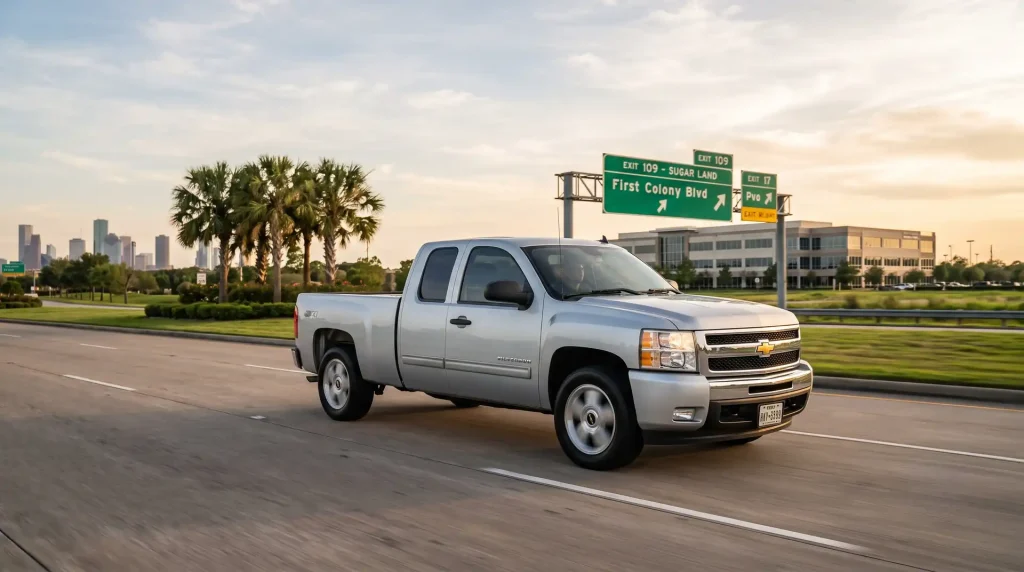
Navigating the crowded streets of Sugar Land, heading down Highway 6, or hauling a trailer out toward First Colony requires a pickup that never skips a beat. The 2008 Chevrolet Silverado 1500 remains a staple on Texas roads because of its rugged GMT900 design, smooth ride, and versatile powertrain lineup.
However, whether you are keeping an aging daily driver running strong or shopping for a dependable pre-owned work truck, understanding what sits under the hood is critical. The 2008 Chevy Silverado 1500 engine family introduced significant technological shifts—most notably Active Fuel Management (AFM), that drastically affected both performance and long-term maintenance needs.
This comprehensive guide breaks down all the 08 Chevy Silverado engine specifications, examines real-world reliability, details step-by-step diagnostic procedures, and provides essential advice tailored specifically for drivers operating in Fort Bend County.
Table of Contents
ToggleThe Quick Answer: 2008 Chevy Silverado Engine Lineup at a Glance
The 2008 Chevy Silverado engine lineup gave truck buyers four distinct options, ranging from an economical V6 up to a high-output 6.0L V8.
Here is a quick summary of the factory performance figures for the 1500 half-ton series:
- 4.3L Vortec V6 (LU3): 195 hp / 260 lb-ft torque
- 4.8L Vortec V8 (LY2): 295 hp / 305 lb-ft torque
- 5.3L Vortec V8 (LY5 / LMG / LC9): 315 hp / 338 lb-ft torque
- 6.0L Vortec V8 (L76 VortecMax): 367 hp / 375 lb-ft torque
If you need even heavier towing capacity or a traditional cast-iron heavy-duty foundation, take a moment to compare these options against the classic 2006 Chevrolet Silverado 2500HD specs to determine if a three-quarter-ton truck fits your needs better.
Breaking Down Every 2008 Chevrolet Silverado Engine Variant
Each motor option in the 2008 catalog serves a specific purpose. Choosing the right configuration depends entirely on how you use your truck day to day.
4.3L Vortec V6 (LU3)
The standard base engine on entry-level Work Truck trims. It is a simple, pushrod V6 built for basic transport and light fleet duty. While it lacks heavy towing muscle, it avoids the complex cylinder deactivation hardware found on larger V8s.
4.8L Vortec V8 (LY2)
This iron-block small-block V8 is often praised by mechanics for its straightforward design. It produces competitive power without utilizing Active Fuel Management. For drivers prioritizing pure mechanical durability over fuel economy features, the 4.8L is a proven performer.
5.3L Vortec V8 (LY5, LMG, LC9)
The most common 2008 Chevy Silverado 1500 engine choice on the road today. Available in both iron-block and aluminum-block (LC9) configurations, as well as Flex-Fuel (E85) variants. This motor introduced standard Active Fuel Management to deactivate four cylinders under light loads, balancing daily commuting efficiency with robust towing capacity.
6.0L VortecMax V8 (L76)
Designed for drivers who wanted maximum trailering capability in a light-duty chassis. Featuring aluminum construction, variable valve timing, and AFM, this motor delivers impressive passing power on fast-moving highways like US-59.
2008 Chevy Silverado 1500 Engine Specifications
Understanding how these powertrains compare side-by-side helps you evaluate pre-owned models or select replacement assemblies. For broader context on how these motors evolved in later model years, you can also review our guide on Silverado 1500 engine options.
| Engine Variant | Cylinder Config | Horsepower | Torque (lb-ft) | AFM Technology | Standard Transmission |
| 4.3L Vortec V6 | V6 (Pushrod) | 195 hp @ 4,600 RPM | 260 lb-ft @ 2,800 RPM | No | 4-Speed Automatic |
| 4.8L Vortec V8 | V8 (Iron Block) | 295 hp @ 5,600 RPM | 305 lb-ft @ 4,800 RPM | No | 4-Speed Automatic |
| 5.3L Vortec V8 | V8 (Iron / Aluminum) | 315 hp @ 5,200 RPM | 338 lb-ft @ 4,400 RPM | Yes | 4-Speed Automatic |
| 6.0L Vortec V8 | V8 (VortecMax) | 367 hp @ 5,800 RPM | 375 lb-ft @ 4,400 RPM | Yes | 4-Speed Heavy Duty |
Step-by-Step Diagnostic Guide for 2008 Silverado Engine Issues
When your engine begins running rough, consuming excess oil, or throwing dashboard warnings, follow this systematic diagnostic routine to pinpoint the root cause.
Step 1: Perform an OBD-II Fault Code Scan
Connect an OBD-II scanner to the diagnostic port located under the steering column. Look for misfire codes (P0300 through P0308) or oil pressure sensor faults (P0521). Pay close attention to cylinders #1 and #7, as these are primary targets for AFM-related misfires.
Step 2: Check the Physical Dipstick Level
Do not rely entirely on the digital oil life monitor. Pull the physical dipstick weekly. If the oil level drops more than one quart every 1,500 to 2,000 miles without visible external leaks on your driveway, the engine is likely burning oil internally through the cylinder deactivation system.
Step 3: Inspect Spark Plugs for Oil Contamination
Remove the spark plug from cylinder #1 or #7. Check for heavy carbon buildup or wet oil deposits on the electrode. Oil spray from the crankcase pressure relief valve frequently fouls these specific plugs when AFM is active.
Step 4: Measure Dynamic Oil Pressure
If you hear a top-end ticking sound or see low oil pressure warnings on the dash instrument panel, install a mechanical pressure gauge at the oil filter housing. Verify that mechanical oil pressure meets factory minimums (at least 6 PSI at idle when warm) to rule out a clogged oil pickup screen or failing oil pump.
Symptom, Cause, and Action Matrix
Use this quick reference matrix to match common driving symptoms with their mechanical causes and recommended fixes.
| Observed Driving Symptom | Probable Mechanical Cause | Required Corrective Action |
| Metallic ticking from top of engine | Collapsed AFM lifter mechanism | Replace lifters, guide trays, and inspect camshaft |
| Rough idle with flashing check engine light | Oil-fouled spark plug on cylinder #1 or #7 | Replace spark plug, clean wire, consider AFM disabler |
| Oil pressure gauge reading zero or erratic | Clogged oil pressure sensor screen / failed sensor | Clean oil manifold screen and install new sensor |
| Sputtering under heavy acceleration | Failing fuel pump assembly or dirty injectors | Test fuel rail pressure and replace pump if below spec |
If you drive an older transitional model year, reviewing the common issues with the 2007 Silverado engine will reveal very similar mechanical patterns and valve train troubleshooting steps.
Common Pitfalls to Avoid with the 2008 Silverado 1500
Maintaining a 2008 model requires avoiding several common traps that can quickly lead to expensive repair bills.
- Neglecting Low Oil Levels: Operating the 5.3L V8 with low oil starves the delicate solenoid-actuated lifters. Running even two quarts low can cause a mechanical lifter to collapse and damage the camshaft lobe.
- Skipping the Oil Pressure Sensor Screen Filter: When replacing a faulty oil pressure sensor behind the intake manifold, many mechanics forget to replace the tiny mesh screen underneath it. Leaving a dirty screen in place causes the new sensor to read false low pressure immediately.
- Ignoring the Valve Cover TSB Update: Installing standard replacement valve covers will not stop oil consumption. General Motors released an updated driver-side valve cover with a relocated PCV baffle designed specifically to reduce oil ingestion into the intake manifold.
Safety and Mechanical Urgency Guide
Ignoring early warning signs on a full-size pickup can turn a minor repair into a major safety hazard on busy freeways.
| Warning Indicator / Symptom | Urgency Level | Driver Action Required |
| Flashing Check Engine Light | Critical Emergency | Stop driving immediately; pull over safely to prevent catalytic converter destruction |
| Low Oil Pressure Warning Display | Critical Emergency | Turn off the engine immediately; check oil level and do not restart until verified |
| Solid Check Engine Light | Medium Severity | Schedule a diagnostic scan within 48 hours; check gas cap and basic sensors |
| Engine Temperature Exceeding 235°F | High Urgency | Turn off air conditioning, turn heater on full high, and safely exit traffic |
Estimated Repair and Service Costs in Sugar Land, TX
Budgeting for routine repairs and major service items helps you maintain your truck without unexpected financial surprises.
- AFM Disabler Device (Plug-and-Play OBD-II): $200 to $250 (Installs in seconds; disables cylinder deactivation electronically)
- Updated GM PCV Valve Cover Replacement: $220 to $380 (Includes updated baffle design and new valve cover gasket)
- Oil Pressure Sensor & Mesh Screen Replacement: $280 to $450 (Includes labor to work behind the upper intake manifold)
- Full AFM Mechanical Delete Kit & Camshaft Repair: $2,800 to $4,200 (Requires removing cylinder heads, installing non-AFM lifters, new camshaft, and custom ECM tuning)
Local Driving Conditions in Sugar Land and Fort Bend County
Driving a heavy truck in Sugar Land brings specific regional factors into play. Long commutes along US-59 and stop-and-go driving on Highway 6 during peak heat put immense thermal stress on your engine oil and cooling system. Extreme summer temperatures accelerate thermal degradation of engine oil, which makes active cylinder deactivation lifters even more vulnerable to sticking.
Additionally, local humidity and sudden severe weather downpours can cause standing water on low-lying access roads near the Brazos River. Ensuring your engine air intake remains completely sealed and your drive belts are properly tensioned prevents slipping or stalling when traversing wet pavement.
Finally, keeping your motor running smoothly without active check engine lights is mandatory for passing annual Fort Bend County emissions and safety inspection standards.
Pro Tip #1: Install a Catch Can on 5.3L V8 Models
Installing an aftermarket oil catch can in line with your PCV hose catches oil mist before it enters your intake manifold. This simple modification keeps your intake valves clean, stops spark plug fouling, and costs under $150.
Pro Tip #2: Shorten Severe-Duty Oil Change Intervals
While the dashboard oil life monitor may suggest 7,500 miles between changes, Texas heat demands more frequent care. Change your engine oil every 4,000 to 5,000 miles using high-quality full synthetic 5W-30 motor oil to keep the delicate internal passages of the overhead valve train completely free of sludge.
Frequently Asked Questions
What is the most common problem with the 2008 Chevy Silverado 1500 engine?
Excessive oil consumption caused by the Active Fuel Management (AFM) system is the most widespread issue. Oil is drawn past piston rings and through the PCV valve into the combustion chamber when cylinders deactivate, leading to oil-fouled spark plugs and premature lifter wear.
How can I disable AFM on my 2008 Silverado?
You can disable AFM electronically using a plug-in OBD-II disabler device or through a custom ECM software tune. To eliminate the risk of mechanical lifter failure permanently, a physical AFM delete kit (installing standard non-AFM lifters and a conventional camshaft) must be installed.
Is the 4.8L V8 better than the 5.3L V8 in 2008?
While the 5.3L V8 produces more horsepower and torque, the 4.8L V8 is often considered simpler long-term because it does not feature Active Fuel Management hardware, avoiding the associated oil consumption and lifter failure risks.
What causes low oil pressure readings at idle on a 2008 Silverado?
Low oil pressure readings are commonly caused by a clogged screen under the oil pressure sensor, a worn oil pump O-ring at the pickup tube, or internal engine bearing wear resulting from running the engine with low oil levels over extended periods.
What engine oil weight should I run in a 2008 Silverado V8?
General Motors recommends full synthetic 5W-30 oil meeting Dexos specifications for both the 4.8L and 5.3L V8 engines. In hot climates like Sugar Land, using a quality full synthetic oil helps resist thermal breakdown during high-temperature driving.
Reliable Support for Your Truck on Sugar Land Roads
Taking proactive care of your truck’s engine ensures it remains a dependable vehicle for work, family transport, and long road trips. Understanding how to manage cylinder deactivation, monitoring oil levels, and addressing warning lights early keeps your vehicle operating smoothly for years to come.
If an unexpected engine failure, low oil pressure warning, or sudden breakdown ever leaves you stranded along Highway 6 or US-59, you do not have to handle it alone. Reach out to Texans Crown Towing for quick, professional roadside assistance and local towing services tailored for Sugar Land truck owners.