

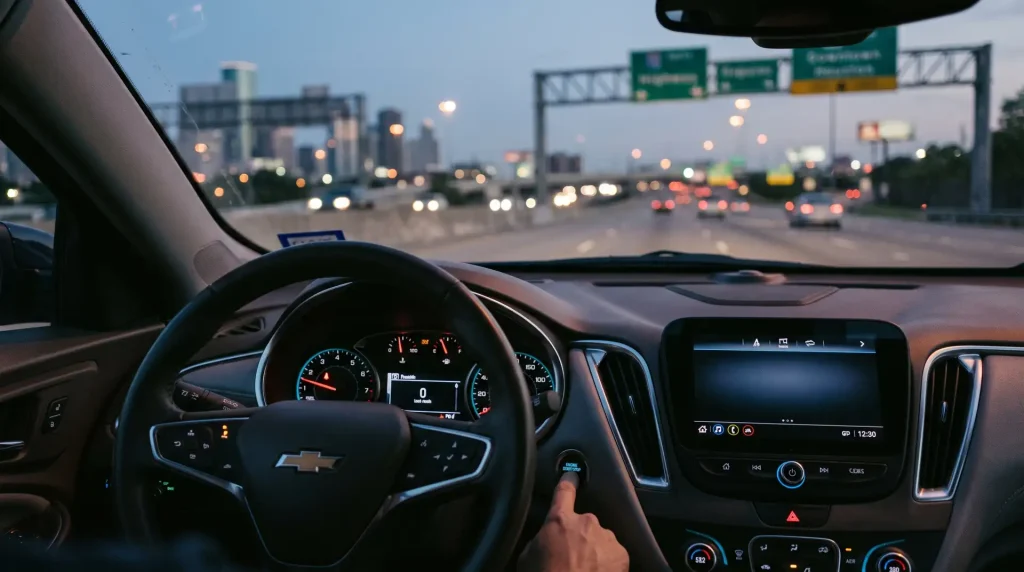
You turn the key or push the start button, expect the engine to roar to life, and nothing happens. The headlights glow brightly, the radio powers up, and the dashboard illuminates like a Christmas tree. If your car won’t start but all lights come on, you are dealing with one of the most frustrating automotive headaches out there.
Standing stranded in a Houston parking lot on a humid afternoon is nobody’s idea of a good time. It feels illogical that your electrical accessories work perfectly while the engine refuses to turn over.
The good news is that this specific symptom narrows down your list of suspects significantly. In this detailed guide, we will break down why your car won’t start, but all lights come on, walk through step-by-step troubleshooting, and help you get back on Texas roads safely.
Table of Contents
ToggleQuick Answer: Why Your Car Won’t Start When the Lights Work
When your lights work, but the engine will not crank or fire up, your battery has enough power to run low-draw accessories (which take about 5 to 10 amps), but not enough juice to power the starter motor (which requires 150 to 300+ amps).
The most common causes for this issue include:
- Weak or Failing Battery: Sufficient voltage for cabin lights, insufficient amperage for cranking.
- Bad Starter Motor or Solenoid: Electrical current reaches the starter, but the motor cannot turn the engine.
- Faulty Ignition Switch or Push-Button Module: Signal fails to reach the starter circuit.
- Neutral Safety / Brake Pedal Switch Failure: The car does not recognize you are in Park or pressing the brake.
- Corroded Battery Terminals or Loose Ground Cables: High resistance stops heavy current flow under load.
Understanding the Difference: Cranking vs. No-Crank
To fix the problem, you first need to identify what sound your car makes when you try to start it.
Scenario A: No Crank, No Noise (Or a Single Click)
You turn the key, the lights stay bright, but you hear total silence or a single sharp “click” sound from under the hood. This indicates an electrical delivery problem. Current is not reaching the starter motor, or the starter solenoid has mechanically locked up.
Scenario B: Rapid Clicking Sound
You turn the key and hear a fast “clack-clack-clack” noise. This is the classic symptom of a weak battery. The starter solenoid tries to engage, pulls heavy current, voltage drops instantly, the solenoid disengages, and the cycle repeats rapidly.
Scenario C: Engine Cranks Over, But Won’t Catch (Engine Turns)
The engine makes a normal “rrm-rrm-rrm” rotating sound, but it never catches fire. If your engine cranks fine while a Check Engine Light Flashing indicator appeared earlier on your dashboard, your battery and starter are fine. Your issue lies with fuel delivery, ignition spark, or timing.
Detailed Causes: Why Electricals Work While Engine Dies
Understanding how your vehicle distributes electrical power helps explain why your headlights work while your motor stays dead.
1. The High-Amperage Gap
Your cabin lights, radio, and dashboard screens run on very low current. A weak 12-volt battery sitting at 11.8 volts can easily illuminate LEDs and digital screens. However, turning over a heavy metal crankshaft requires massive rotational force. If your battery cannot supply peak cranking amps, the engine will not budge.
2. Corrosion and High-Resistance Connections
Corrosion forms a white or bluish crust on battery posts. This crust acts like an electrical insulator. Low-draw accessories pull current right through minor corrosion, but high-draw starter currents generate heat and high resistance, blocking power completely.
3. Starter Motor Solenoid Failure
The starter solenoid acts as a heavy-duty electrical relay mounted on the starter motor. Over time, internal contacts burn out or get stuck. Power reaches the solenoid, but it fails to transfer current to the electric motor inside.
4. Safety Interlock Switches
Modern vehicles use safety switches to prevent starting in dangerous conditions. Automatic vehicles require a functional brake pedal switch and neutral safety switch in the shifter console. Manual vehicles require a clutch pedal position switch. If these switches fail, your computer keeps the starter locked out even with full battery power.
Step-by-Step Diagnostic Guide
Follow this simple, logical testing sequence to diagnose your vehicle right where it is parked.
Step 1: Check Your Transmission Shifter and Brake Pedal
If you drive an automatic, make sure your shifter is fully locked in Park. Push the lever firmly into Park, or try shifting into Neutral while holding the foot brake down, then try starting again. If you have a push-button start, verify your brake lights come on when depressing the pedal to confirm the brake switch works.
Step 2: Try a “Key-On” Headlight Dimming Test
Turn on your low-beam headlights. Watch the light beam against a wall or garage door while turning the key to the “Start” position:
- Lights stay completely bright with zero dimming: Power is not reaching the starter circuit (suspect ignition switch, relay, starter solenoid, or neutral safety switch).
- Lights go almost totally dark: The battery is heavily drained or shorted internally under load.
- Lights dim slightly: The starter motor may be physically locked up or jammed.
Step 3: Perform a Visual Battery Terminal Inspection
Pop your hood and examine the battery posts. Look for loose metal clamps or fuzzy white/green corrosion buildup. Wiggle the battery cables firmly with your hand; if they rotate on the posts, they are too loose to pass starting current.
Step 4: Tap the Starter Motor (Emergency Rescue Technique)
If you can safely locate the starter motor underneath the engine bay, have a helper hold the key in the “Start” position while you gently tap the metal starter body with the wooden handle of a hammer or screwdriver. This can temporarily free stuck internal brushes or solenoids to give you one last start.
Diagnostic Matrix: Symptoms vs. Probable Causes
Use this quick reference table to narrow down your failure point based on what you see and hear.
| What You Hear / Observe | Primary Suspected Component | Recommended Next Action |
| Single loud click, lights stay bright | Starter Solenoid or Motor | Tap starter body; check starter relay in fuse box |
| Rapid repetitive clicking noise | Drained / Weak Battery | Jump-start the battery; test alternator output |
| Total silence, lights stay bright | Neutral Safety / Brake Switch | Shift into Neutral and retry; check starter fuse |
| Engine cranks normally, will not catch | Fuel Pump, Ignition, or Timing | Check fuel pressure; scan for engine fault codes |
| Dim lights that flicker rapidly | Loose or Corroded Battery Cables | Clean terminals with a wire brush and tighten clamps |
Common Pitfalls to Avoid
Steer clear of these frequent troubleshooting mistakes that waste money and time:
- Assuming the Battery Is Good Because Lights Are Bright: This is the #1 mistake drivers make. Always test battery amperage under load before replacing other parts.
- Buying a Starter Without Testing Relays First: Starter relays inside the under-hood fuse box cost $15 to $30. Replacing a $250 starter motor when a simple relay failed is an expensive mistake.
- Over-cranking the Ignition: Cranking an engine continuously for more than 10 seconds overheats starter windings and drains remaining battery power. Limit crank attempts to 5-second bursts with 30-second cooling pauses.
Emergency Urgency and Safety Guide
Safety comes first when dealing with unexpected vehicle breakdowns.
| Breakdown Scenario | Risk / Severity Level | Immediate Action Required |
| Stranded in an active highway lane | Critical Emergency | Stay in car with seatbelt on, turn on hazards, call emergency services |
| No-start in a dark, unfamiliar parking lot | High Urgency | Lock doors, share your location with family, request immediate roadside help |
| Vehicle fails to start in home driveway | Low Urgency | Perform basic cable checks, schedule mobile service or jump-start |
| Burning smell or smoke from starter | Critical Emergency | Disconnect battery negative terminal immediately; do not attempt starting |
Estimated Repair and Service Costs in Houston
Here is what you can expect to pay for typical repairs associated with this symptom:
- Battery Replacement (Parts & Labor): $150 to $280 (Includes testing and terminal cleanup)
- Starter Motor Replacement: $350 to $650 (Varies based on engine access and labor time)
- Neutral Safety / Brake Light Switch Replacement: $110 to $220 (Quick electronic replacement)
- Battery Cable / Terminal Repair: $75 to $150 (Clears corrosion and replaces worn clamps)
Navigating Local Houston Driving Conditions
Dealing with vehicle breakdowns in Greater Houston comes with unique regional challenges. Our intense summer heat accelerates battery degradation faster than almost anywhere else in the country. Internal battery fluid evaporates under ambient temperatures exceeding 95°F, causing sudden internal cell failure without advance warning.
In addition, driving through high humidity and sudden rainstorms along I-10 or the 610 Loop accelerates copper cable corrosion. Water splashing up into the engine bay degrades ground straps and starter wiring connections over time.
When your car stalls or refuses to start during hot Texas afternoons, waiting extended periods without air conditioning presents serious health risks. Keeping a trusted local roadside assistance contact on hand ensures you stay safe regardless of where your car decides to stop.
Pro Tip #1: Perform the Swap Test on Your Starter Relay
Open your under-hood fuse box and locate the starter relay. Find an identical non-critical relay in the box (such as the horn or A/C compressor relay) and swap them. If your car starts right up, you just saved hundreds of dollars on an unnecessary starter replacement!
Pro Tip #2: Carry a Portable Lithium Jump Starter
Modern compact lithium jump packs fit easily in your glove compartment and retain charge for months. They provide enough peak cranking amps to jump-start a V8 engine without needing a second vehicle, getting you out of tough spots fast.
Frequently Asked Questions
Why does my car click once when I try to start it?
A single loud click usually indicates that your starter solenoid is engaging, but the starter motor lacks sufficient current or mechanical freedom to rotate the engine crankshaft. This points to a weak battery, dirty cables, or a failing starter motor.
Can a bad alternator cause my car not to start if lights work?
Yes. If your alternator failed while driving, your battery drained down to a level where it can still power dashboard lights, but lacks enough juice to restart the engine after you turn it off.
How do I know if it is my starter or my battery?
If you hear rapid clicking, it is almost always the battery. If you hear a single click or total silence while headlights remain bright, the starter circuit or solenoid is the primary suspect. A quick jump-start attempt will confirm: if it starts with jumper cables attached, your battery is the culprit.
Will jumping a car work if the starter is bad?
No. Jumper cables supply extra electrical current to your battery. If your starter motor has suffered mechanical failure or a burned-out internal armature, adding extra battery power will not make it turn over.
Can a blown fuse cause a car not to start but lights work?
Yes. If the ignition switch fuse or starter control fuse in your engine bay fuse panel blows, electrical signals cannot reach the starter solenoid, leaving your accessories working normally while the engine remains silent.
Reliable Roadside Support Across Houston
Experiencing an unexpected vehicle no-start disrupts your entire routine, leaving you frustrated and stressed. Understanding how your electrical system behaves helps you stay calm and make smart repair decisions.
If you are stranded anywhere in the Greater Houston area with a vehicle that refuses to start, you do not have to struggle alone on the roadside. Reach out to Texans Crown Towing for fast, friendly jump-starts, battery diagnostics, and dependable towing services tailored to get you home safely.