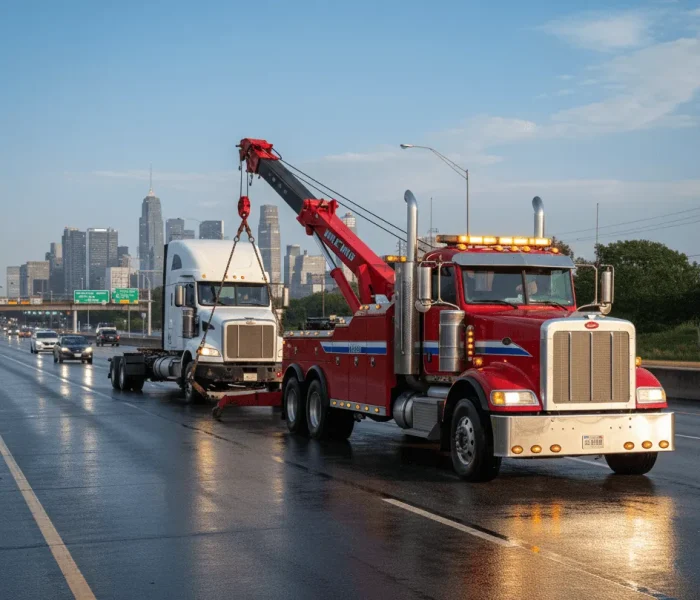
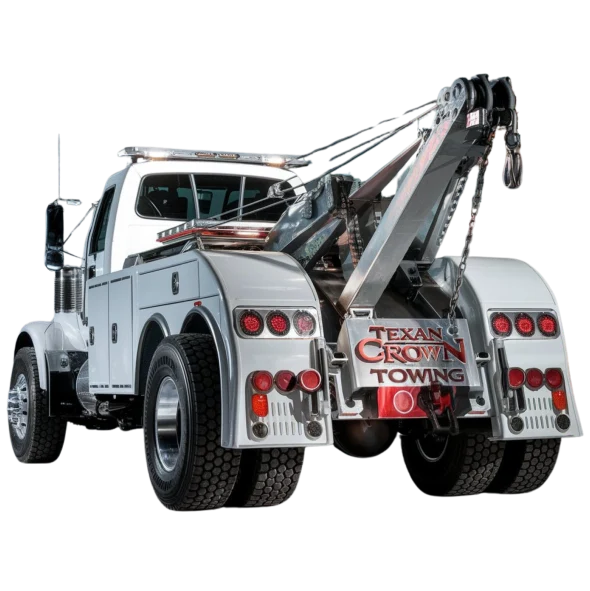
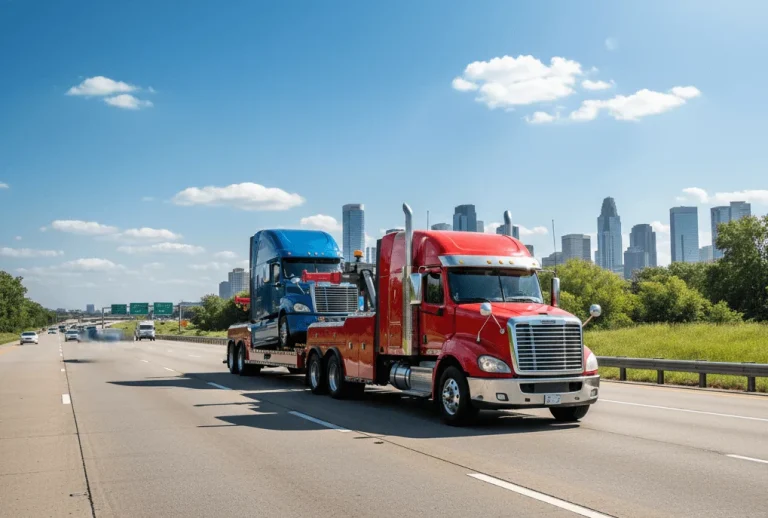
When a commercial tractor-trailer, heavy-duty tanker, or oversized freight hauler becomes disabled near the Port of Freeport or along the industrial corridors of SH-288, standard towing is out of the question. Big Rig Towing in Freeport is a technical heavy-duty recovery service designed to manage vehicles with gross weights up to 80,000 lbs. Utilizing high-capacity underlifts and integrated wreckers, we specialize in transporting massive industrial assets that keep the Texas coast moving. This service provides the specific torque and specialized rigging necessary to recover loaded rigs from port docks, narrow industrial roads, and highway shoulders without damaging the vehicle’s axles or sensitive air-brake systems.
Why Fleet Operators Choose Our Heavy Recovery Team in Freeport?
The high-stakes maritime and industrial environment of Freeport presents variables that only a local recovery expert can manage. Texans Crown Towing provides the infrastructure needed to support the heavy logistics of Brazoria County. We focus on:
Port Area Expertise: We understand the logistical flow around the Port of Freeport, ensuring our heavy wreckers navigate terminal traffic efficiently to reach your disabled rig without causing further bottlenecks.
Corrosive Environment Knowledge: Operating near the coast means dealing with salt air and humidity. Our equipment is maintained to handle the environmental stress, ensuring our winches and lifts operate with maximum reliability during maritime-related recoveries.
Strategic Highway Access: With direct access to the SH-288 and SH-36 junction, we offer rapid deployment for rigs facing mechanical failure or tire blowouts on the primary freight routes heading toward Houston.
Our recovery protocol is a systematic engineering process designed to protect your investment and minimize downtime. Once your dispatch is received, we evaluate the rig’s cargo type and mechanical status to send a wrecker with the appropriate boom and winch capacity. Upon arrival at your Freeport location, our operators establish a high-visibility work zone to protect your driver and the equipment from passing industrial traffic. We prioritize “clean” tows by pulling the driveline to protect your transmission from overheating. Whether the rig needs to be transported to a specialized diesel facility near the Brazosport area or a secure company yard, we manage the logistics and paperwork with professional precision.
Other Services We Offer
Semi Duty Towing
Light Duty Towing
Commercial Towing
Construction Towing
Flatbed Towing
Big Rig Towing
RV Towing
Tow Truck
Off Road Towing
Limo Towing
Battery Jump Start
Out of Gas Refill
Car Lockout Service
Ignition Key Replacement
Flat Tire Repair
Truck Tire Change
Heavy Duty Towing
24/7 Towing
Frequently Asked Questions
Can you upright an overturned 18-wheeler near the Port of Freeport? Yes. We utilize 50-ton rotators and air-cushion recovery systems to upright overturned trailers and tractors safely. This method allows us to lift the vehicle in tight port spaces while minimizing additional stress on the frame.
What happens if my big rig is stuck in the soft sand or mud near SH-36? The coastal soil in Freeport can be treacherous. We provide heavy-duty winching services using long-reach cables and snatch blocks to extract your rig from soft shoulders or construction sites without damaging your bumper or fenders.
Do you handle heavy-duty towing for industrial machinery and tankers in Freeport? Absolutely. We specialize in the transport of oversized industrial equipment and tankers. Our operators are trained to handle the unique weight distribution and safety requirements of heavy tankers common in the Freeport industrial zone.
Is your equipment safe for towing heavy-duty motorhomes or tour buses? Yes. We use specialized frame-forks and wheel-lift attachments designed specifically for long-wheelbase vehicles, ensuring they are transported through Freeport without any contact between the body and the road.
How fast can a heavy-duty unit reach the SH-288 and SH-36 intersection? Since we monitor the major industrial freight lanes in Freeport, our average response time to the primary highway intersections is typically between 30 and 45 minutes, depending on current traffic and terminal activity.