
Towing services are essential for vehicle recovery and roadside assistance. They come in two main types: heavy duty and light duty towing.
Understanding the difference is crucial for vehicle owners and fleet managers. It helps in choosing the right service for specific needs.
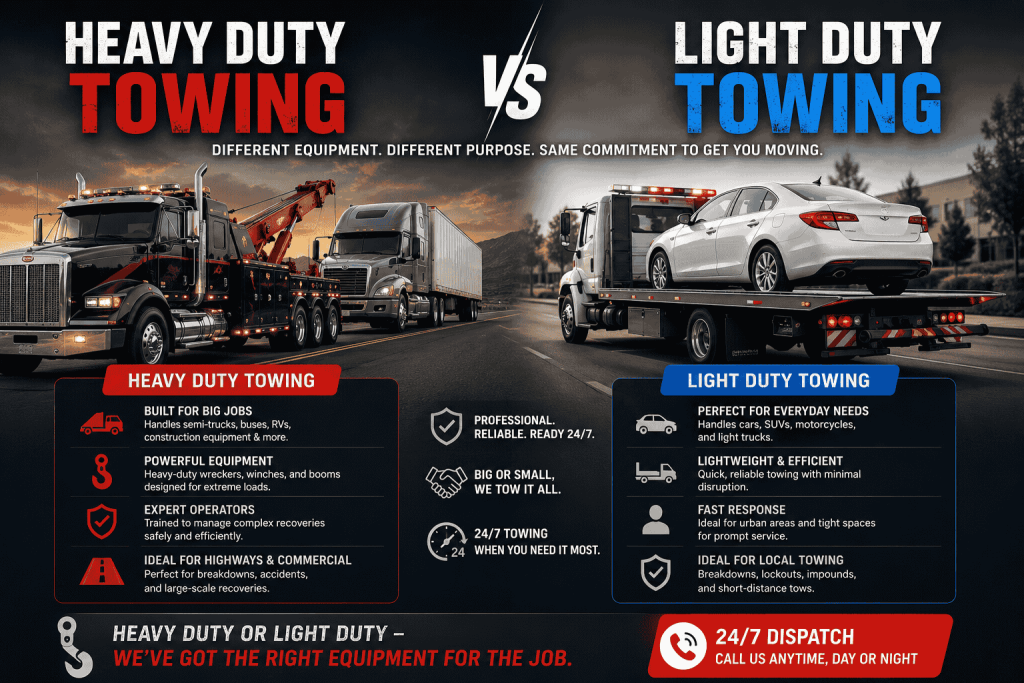
Heavy duty towing is designed for large vehicles like trucks and buses. It involves specialized equipment and skilled operators.
Light duty towing, on the other hand, is suitable for smaller vehicles. It is often used for cars, motorcycles, and small vans.
Both types of towing play vital roles in commercial and personal vehicle recovery. They ensure safe and efficient transport.
Choosing the right towing service can save time and reduce costs. It also ensures the safety of the vehicle and its occupants.
Table of Contents
ToggleWhat Is Towing? An Overview
Towing involves moving a disabled vehicle from one place to another. This can be due to mechanical failure or accident. It is a critical component of roadside assistance services.
There are various types of towing services available, each suited for different situations. Knowing which service to use ensures your vehicle is handled properly. From light passenger cars to massive commercial rigs, towing covers a wide array of needs.
Common Towing Services
- Light duty towing
- Heavy duty towing
- Flatbed towing
- Emergency towing
Whether you’re facing a minor breakdown or a major accident, understanding towing can help. It’s about more than just moving vehicles; it ensures safety and recovery during vehicle mishaps.
Defining Heavy Duty Towing
Heavy duty towing is for large vehicles like trucks and buses. It’s crucial for transporting big machinery and commercial loads. Unlike light duty towing, it involves robust equipment and experienced operators.
Heavy duty tow trucks possess powerful engines and specialized tools. They can handle loads exceeding 25,000 pounds. This makes them ideal for moving oversized and heavy commercial vehicles.
Features of Heavy Duty Tow Trucks
- Winches and booms
- Wheel lifts
- Advanced hydraulics
Operators undergo special training to navigate complex situations. This includes recovering buses, semis, and construction equipment. The skillful handling of these vehicles ensures safety for both vehicle and driver.
Heavy duty towing often requires additional permits due to vehicle size. Adhering to regulations is crucial for safety and compliance. Whether it involves crane recovery or air cushion recovery, this service is essential for heavy vehicles.
Defining Light Duty Towing
Light duty towing caters to smaller vehicles like cars and motorcycles. It’s designed for quick and efficient service. This type of towing is most frequently requested for everyday vehicle issues.
Light duty tow trucks are agile and easy to maneuver. This makes them suitable for urban areas with limited space. They can typically tow up to 10,000 pounds, making them ideal for minor vehicle recoveries.
Common Equipment in Light Duty Towing
- Flatbeds
- Hook and chain systems
- Wheel lifts
Light duty operators often provide additional roadside services. These include jump starts, tire changes, and lockout solutions. The versatility of light duty towing makes it indispensable for everyday needs.
Many companies offer light duty towing as part of comprehensive roadside assistance. Its widespread availability ensures quick response times for emergencies. Whether it’s a breakdown or minor accident, light duty towing is ready to assist.
Key Differences Between Heavy Duty and Light Duty Towing
Understanding the differences between heavy duty and light duty towing is crucial. Each serves distinct needs based on vehicle size and situation. Recognizing these differences can help in making informed decisions.
Heavy duty towing is all about power and capacity. It handles larger vehicles like buses and trucks with ease. This requires robust equipment and specialized skills due to complex recovery situations.
Heavy Duty Towing Attributes
- Towing capacity over 25,000 pounds
- Use of powerful winches and booms
- Specialized operator training needed
Light duty towing, on the other hand, focuses on agility and efficiency. It’s best suited for cars and small vans, performing everyday recoveries. These services are usually cost-effective and quick to deploy.
Light Duty Towing Characteristics
- Towing capacity up to 10,000 pounds
- Flatbeds and simple equipment
- General roadside assistance capabilities
Another key difference is the cost involved. Heavy duty towing typically incurs higher expenses due to complexity. In contrast, light duty services remain affordable for most routine needs.
Finally, the choice between these towing types affects response time. Light duty towing often offers faster service given its simplicity. Meanwhile, heavy duty towing is available around the clock for commercial demands.
Types of Vehicles and Situations for Each Towing Service
Choosing between heavy duty and light duty towing depends on the vehicle type. Heavy duty towing is reserved for large, heavy vehicles. This includes commercial trucks, buses, and RVs. These vehicles require more power and specialized equipment to transport safely.
Light duty towing is suitable for standard automobiles and motorcycles. It’s ideal for everyday situations like breakdowns or minor accidents. This service is also used in urban areas, thanks to its agility and speed.
Some situations may involve unique towing requirements. For instance, heavy duty towing is needed for construction equipment and oversize loads. Meanwhile, light duty services are frequently used for short-distance recoveries.
Towing Situations Overview
- Heavy Duty: Commercial trucks, large machinery, buses
- Light Duty: Cars, motorcycles, urban recoveries
Understanding which service fits your needs is essential. The choice affects not just logistics but also the safety of the operation. This makes selecting the right towing option a critical decision.
Equipment and Technology Used
Heavy duty towing demands specialized equipment. These tow trucks feature robust engines capable of pulling immense loads. They also come equipped with winches, booms, and wheel lifts. This equipment enables safe and efficient towing of large vehicles.
Technology plays a significant role in towing today. GPS systems and telematics are standard in many tow trucks. These tools allow operators to track routes and assess vehicle conditions. Advanced systems improve efficiency and ensure timely service.
Light duty tow trucks utilize different gear suited for smaller vehicles. They often feature flatbeds and hook-and-chain systems. These are optimal for quick and straightforward recoveries. Light duty equipment is designed for ease of use and speed.
Key Equipment Features
- Heavy Duty: Robust engines, winches, wheel lifts
- Light Duty: Flatbeds, hook-and-chain systems
Both heavy and light duty towing employ evolving technology to enhance performance and safety. This focus on innovation ensures secure and reliable service every time.
Operator Skills and Training Requirements
Operators in heavy duty towing require specialized training. Handling large loads demands precise skill and extensive experience. Training covers the use of complex equipment and safety protocols. Operators must understand the nuances of towing massive vehicles.
Light duty towing also needs trained professionals. The focus here is on efficient and quick vehicle recovery. Operators are often certified in roadside assistance. This ensures they handle tasks like jump starts and lockouts with ease.
Key skills for towing operators include:
- Safety protocol expertise
- Equipment operation
- Problem-solving skills
Both heavy and light duty towing require that operators prioritize safety. Well-trained operators reduce risks and improve the success of towing operations.
Cost Factors: Heavy Duty vs Light Duty Towing
Heavy duty towing often incurs higher costs. The complexity and equipment involved justify this. Larger vehicles require more resources and expertise.
In contrast, light duty towing tends to be more economical. Small vehicle recoveries are typically less complex, reducing cost. The equipment used is less expensive and setup is quick.
Factors affecting towing costs include:
- Vehicle size and weight
- Distance of the tow
- Required equipment and labor
Understanding these cost factors helps in budgeting for towing services. Choosing the right service based on need ensures you don’t overspend. Always consider these elements when faced with a towing decision.
Commercial Towing: When Heavy Duty Is Essential
Commercial towing often necessitates heavy duty capabilities. Large commercial vehicles demand robust tow trucks. Buses, tractor-trailers, and construction equipment exemplify such needs.
Heavy duty towing is crucial in commercial settings for several reasons. It ensures safe transportation of oversized loads. Additionally, it provides the necessary support for complex recovery scenarios.
Situations where commercial towing is essential include:
- Moving industrial equipment
- Handling fleet breakdowns
- Responding to large vehicle accidents
For companies, having access to heavy duty towing can minimize downtime. It ensures business operations resume swiftly after incidents. This reliability is vital in commercial sectors requiring constant mobility.
How to Choose the Right Towing Service for Your Needs
Selecting the appropriate towing service can prevent further complications. Consider the size and type of your vehicle. This is critical to determining whether you need heavy or light duty towing.
Evaluate the situation. If you face a complex recovery or transport of heavy machinery, heavy duty towing may be necessary. For everyday vehicle issues, light duty towing is often suitable.
Key factors to consider when choosing a towing service include:
- Vehicle type and condition
- Distance to be towed
- Service provider’s reputation
- Availability of 24/7 support
By assessing these elements, you can make an informed decision. This will ensure a seamless and safe towing experience.
Conclusion: Making the Right Choice for Safe and Efficient Towing
Understanding the differences between heavy and light duty towing is crucial. Your vehicle’s specifications will guide the type of service needed. This knowledge ensures you choose the most effective and efficient option.
Always consider the provider’s experience and equipment. A reliable towing service can make all the difference during a stressful situation. Making an informed choice leads to safe vehicle recovery and minimal hassle.